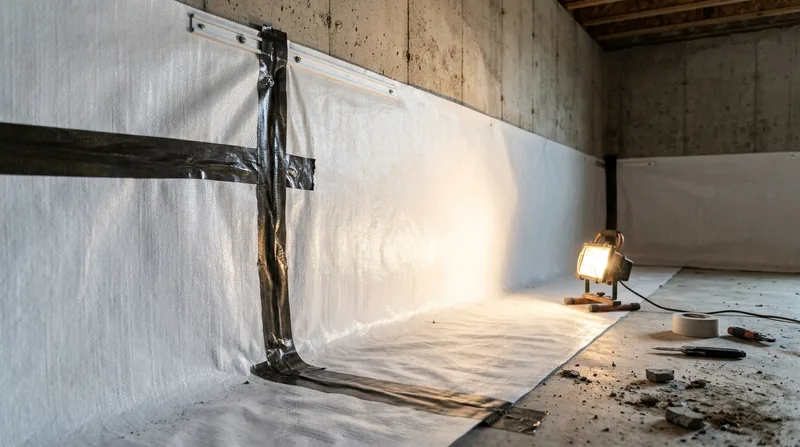




Vapor Barrier Installation in Springfield
If your basement smells musty after a spring storm or the walls sweat through the humid Ozarks summer, Vapor Barrier Installation in Springfield is the fix that stops ground moisture vapor before it ever reaches your living space. Springfield sits on the Springfield Plateau, where cherty red clay over karst limestone holds water against foundations from the Walnut Street historic district to the newer poured basements out in Nixa and Republic. We install heavy-duty vapor barrier sheets on basement walls and slabs, seal every seam, tape every termination, and tie the system into your sump basin where needed. That means a drier lower level and a barrier that holds up through freeze-thaw winters and the heavy thunderstorms that roll through Greene County. If you are still sorting out where the water is coming from, start with a free basement inspection so we can tell you honestly whether vapor is your problem or whether hydrostatic pressure is pushing water through the wall.
Why Vapor Barrier Installation Matters in Springfield's Clay and Karst Terrain
Springfield's soil is a big part of the story. Cherty red clay over limestone sheds rainfall fast and then holds it against the foundation, and the karst springs and sinkholes under the city move water underground in ways that surprise homeowners. Add humid summers and a hard freeze-thaw cycle, and the result is moisture vapor that migrates through concrete and masonry walls all year. Efflorescence, a musty smell, and damp drywall near the floor are the usual calling cards.
- Older limestone and brick foundations in Midtown and the Walnut Street district pull ground moisture straight through the mortar.
- 1910s to 1940s bungalows and foursquares in Rountree and Phelps Grove often have partial basements with no barrier at all.
- 1950s to 1970s brick ranches and split-levels on the south and east sides show vapor damage behind finished walls.
- 1990s to 2020s poured basements in Nixa, Ozark, and southeast Springfield still need a barrier on the interior face.
A properly sealed vapor barrier stops that vapor at the wall and slab, which is the difference between a basement you can use and one you avoid.
Key info: A homeowner in Rountree called us about a musty smell that showed up every June. The walls were dry to the touch but the baseboard read high on a moisture meter. That is vapor, not a leak, and a sealed barrier fixed it without any excavation.
For official guidance on moisture control in below-grade spaces, the U.S. Department of Energy's Building America program publishes solid reference material at energy.gov/eere/buildings/building-america.
How We Install Vapor Barriers in Springfield Basements
Our process is built around the way Springfield homes actually fail. We do not just staple plastic to a wall and call it done. We identify the moisture source, prep the surface, and install a heavy-duty sheet with sealed seams and taped terminations that will still be tight after a decade of Ozarks humidity. Where the slab is involved, we integrate the barrier with the sump basin and discharge line so vapor and water leave the same way.
- We inspect the walls and slab, check for efflorescence and active seepage, and confirm whether the problem is vapor or hydrostatic pressure.
- We remove anything trapping moisture against the wall, including old failing plastic, furring, and damaged drywall.
- We clean and parge rough limestone or brick so the barrier sits flat and the adhesive or fasteners hold.
- We hang heavy-duty vapor barrier sheets with overlapping seams and seal them with compatible tape and mastic.
- We tape terminations at the rim, floor, and penetrations, and integrate the barrier with the sump basin where one is present.
- We test the installation and walk you through what to watch for in the first rainy season.
If the inspection shows the real issue is water coming through the wall, we will tell you that too and point you to the right repair instead of selling you a barrier you do not need.
Key info: A split-level in southeast Springfield had water pooling at the base of a finished wall after every heavy rain. The barrier alone would not have stopped it. We paired the vapor barrier with an interior drain tile system and the wall stayed dry through the next spring.
Vapor Barrier Methods We Use in Springfield Homes
Not every basement needs the same approach. The table below shows the methods we use most often in Springfield and the surrounding towns, and what each one is best suited for. We pick the method after the inspection, not before.
| Approach | Description | Best for |
|---|---|---|
| Wall vapor barrier | Heavy-duty sheet fastened to basement walls with sealed seams and taped terminations. | Masonry and poured walls with vapor migration and musty odor. |
| Slab vapor barrier | Sheet laid over the slab with sealed laps and terminations at the cove joint. | Basements with damp floors and slab moisture under carpet or tile. |
| Dimple board drainage mat | Drainage mat that holds the barrier off the wall and channels water down to the drain tile. | Walls with both vapor and minor seepage, paired with interior drain tile. |
| Sump-integrated barrier | Barrier tied into the sump basin and discharge line so vapor and water exit together. | Basements with an existing sump pump or planned sump installation. |
We match the method to the wall type, the moisture reading, and how you use the space, so the barrier performs the way it should.
Vapor Barrier Installation Cost in Springfield: What to Expect
Most Springfield homeowners want a number before they commit, and that is fair. Vapor barrier installation typically starts around From $3 per square foot of wall or slab area treated, and the final figure depends on the size of the basement, the wall material, and how much prep the surface needs. A poured wall in a newer Nixa home is faster to prep than a rough limestone foundation in Midtown. Access matters too, and so does whether the barrier ties into a sump system.
- Wall material and condition, since rough limestone and brick take more prep than poured concrete.
- Total square footage of wall and slab area covered.
- Whether the barrier integrates with an existing sump basin or a new sump installation.
- Access to the basement and how much old material has to come out first.
- Whether the job is a stand-alone barrier or part of a larger waterproofing scope.
We recommend getting two or three written estimates so you can compare scope, not just price. You can see how we structure our numbers on the pricing page before you call.
What to Look for When Hiring a Waterproofing Contractor Near Springfield
Hiring for vapor barrier work is not complicated if you know what to check. You want a contractor who specializes in below-grade work, carries liability insurance and workers' compensation, and will put the scope in writing. Ask for references from jobs similar to yours, ideally in Springfield or a nearby town like Willard or Battlefield, and call them. Confirm who pulls any permit that applies, since rules vary by jurisdiction and the local building department is the authority. If you are in an HOA, check its requirements before work starts.
We are a Basement Health Association member and we are happy to provide a certificate of insurance on request. When you are ready to talk, reach us through the contact page and we will set up a time to look at your basement.
Vapor Barrier Installation Near Me: What Springfield Homeowners Should Know
If you are searching for vapor barrier installation near me, the key question is whether the contractor understands local conditions. Springfield's karst geology, clay soil, and humid summers create vapor problems that a generic handyman will miss. We work in these conditions every week, from the historic homes on Walnut Street to the newer builds in Republic and Strafford, and we will tell you plainly when a barrier is the right answer and when it is not.
Vapor Barrier Installation in Springfield: Pricing Guide
| Service | Price | Details |
|---|---|---|
| Wall vapor barrier | Starting at $3/sq ft | Includes surface prep, heavy-duty sheet, sealed seams, and taped terminations on basement walls. |
| Slab vapor barrier | Starting at $3/sq ft | Covers slab area with sealed laps and cove joint terminations; price moves with square footage. |
| Dimple board drainage mat | Starting at $4/sq ft | Adds drainage mat behind the barrier; best for walls with both vapor and minor seepage. |
| Sump-integrated barrier | On estimate | Requires on-site look to tie barrier into sump basin and discharge line correctly. |
| Travel | Included | In Springfield and surrounding areas, no separate call-out or mileage fee. |
| Estimate | Free | Response within 24h at (417) 738-3368, no obligation to book. |
Indicative pricing, the exact cost depends on square footage, finish, and site access. Free personalized estimate within 24h at (417) 738-3368.


