Why Walnut Street's Limestone Foundations Are Different
Walnut Street is one of the oldest residential corridors in Springfield, lined with Victorian and early twentieth-century homes built on native limestone. That stone was quarried locally and laid by hand, and it has performed admirably for a century or more. But limestone is a soft, porous material, and it behaves very differently from the poured concrete and cinder block found in newer construction. It absorbs moisture, expands slightly when it freezes, and relies on flexible mortar joints to accommodate small movements without cracking.
Many of these homes were also built with rubble-trench footings, shallow crawl spaces, or full basements finished with parging (a thin coat of mortar) rather than modern damp-proofing membranes. When a homeowner calls us about an old foundation leak on Walnut Street, the cause is rarely a single dramatic failure. It is usually the cumulative result of degraded mortar, clogged perimeter drainage, and soil that has settled against the foundation over decades. Understanding that history is the first step toward a repair strategy that respects the building rather than fighting it.
Common Signs of Limestone Foundation Trouble
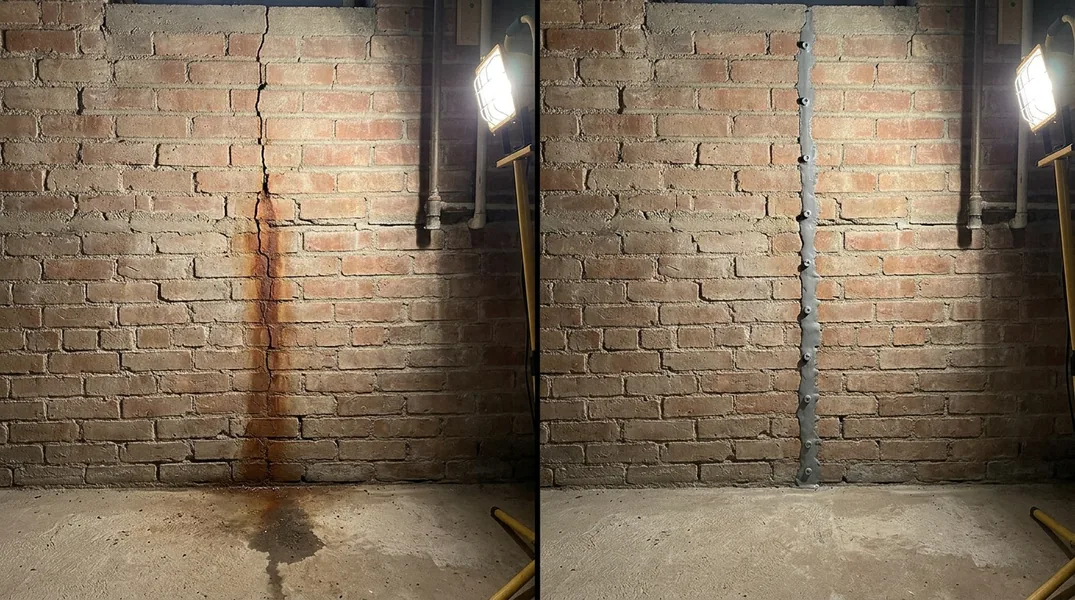
Limestone tells you when it is struggling, but the signals are easy to misread. Crumbling mortar joints between stones are the most common warning sign. If you can scrape mortar out with a screwdriver or see it receding from the stone faces, the joints are no longer doing their job. Interior symptoms include white powdery deposits (efflorescence) on the basement walls, dark damp patches that never fully dry, and a musty smell that lingers even after cleaning. In more advanced cases, you may notice stones that have shifted slightly or parging that has bubbled and flaked away.
Water on the basement floor after heavy rain is another classic indicator. On Walnut Street, where mature trees and older grading often direct stormwater toward the house, a wet basement is frequently a drainage problem as much as a foundation problem. Before recommending any repair, we inspect the exterior grade, downspout discharge, window wells, and the condition of the mortar joints. That assessment determines whether the fix is primarily Foundation Waterproofing, drainage correction, or targeted masonry repair.
Foundation Repointing: The Right Way to Repair Old Mortar
Foundation repointing is the process of removing deteriorated mortar from the joints and replacing it with fresh material that bonds properly to the stone. On historic limestone, the mortar must be softer and more permeable than the stone itself. Modern Portland cement mortar is too hard and too rigid; it traps moisture inside the limestone and forces the stone to crack or spall as it expands and contracts. A lime-based mortar, matched to the original mix, allows the wall to breathe and flex the way it was designed to.
Proper repointing is meticulous work. Joints are ground out to a consistent depth, cleaned thoroughly, and packed in lifts so the mortar cures evenly. Rushing this step or using the wrong mix can cause more damage than the original deterioration. For homeowners dealing with an old foundation leak, repointing is often the single most effective repair, but it works best when paired with exterior water management. That is why we treat repointing as part of a broader Exterior Basement Waterproofing plan rather than a standalone cosmetic fix.
Historic Home Basement Waterproofing Without Damaging Character
Waterproofing a Victorian home basement requires a lighter touch than waterproofing a new build. Excavating the entire exterior perimeter is sometimes necessary, but on tight Walnut Street lots with mature landscaping, porches, and original stone steps, it is not always practical or desirable. In many cases, an Interior Drain Tile System is the better answer. It captures water at the base of the wall and directs it to a sump pump without disturbing the historic exterior.
Interior systems work well with limestone because they manage hydrostatic pressure from the inside while leaving the stone itself undisturbed. We pair them with vapor barriers, proper grading, and downspout extensions to reduce the volume of water reaching the foundation in the first place. For homeowners who want a comprehensive solution, full Basement Waterproofing combines interior drainage, crack and joint sealing, and exterior drainage improvements. The goal is always the same: keep the basement dry while preserving the character that makes these homes worth protecting.
Historic Home Basement Waterproofing Near Me: When to Call a Pro
Some maintenance tasks are reasonable DIY projects for a careful homeowner. Repointing an entire limestone foundation is not one of them. The margin for error is small, the mortar mix must be correct, and improper repairs can accelerate stone deterioration. If you are seeing repeated dampness, crumbling joints, or water on the floor after storms, it is time to bring in a professional who works with historic masonry regularly. A thorough inspection also rules out problems that look like foundation leaks but are actually plumbing, grading, or gutter issues.
Springfield Waterproofing serves homeowners throughout Springfield and nearby communities including Nixa, Battlefield, and Willard. We start with a free estimate that includes a clear explanation of what we found and what we recommend. You can reach us at (417) 738-3368 to schedule a visit.
Limestone Foundation Repair Cost in Springfield: What to Budget
Every limestone foundation is different, so pricing depends on the scope of the work. A small repointing job on a few deteriorated joints is a modest investment. A full-perimeter repoint combined with interior drainage and a sump system is a larger project. Factors that affect cost include the linear footage of damaged joints, accessibility of the foundation, whether exterior excavation is required, and whether drainage improvements are part of the plan.
We believe homeowners deserve transparent numbers before work begins, not surprises afterward. During your free estimate, we walk through the findings, explain the options, and provide a written scope so you can compare bids fairly. If you are budgeting for a historic home, it also helps to plan maintenance in phases: address active leaks and structural concerns first, then schedule repointing and cosmetic restoration as funds allow. Call (417) 738-3368 or request a free estimate to get started.
Looking for a professional basement waterproofing contractor in Springfield? Springfield Waterproofing responds fast for all your basement waterproofing needs.
Get a Free QuoteOur services: Basement Waterproofing · Interior Drain Tile System · Exterior Basement Waterproofing